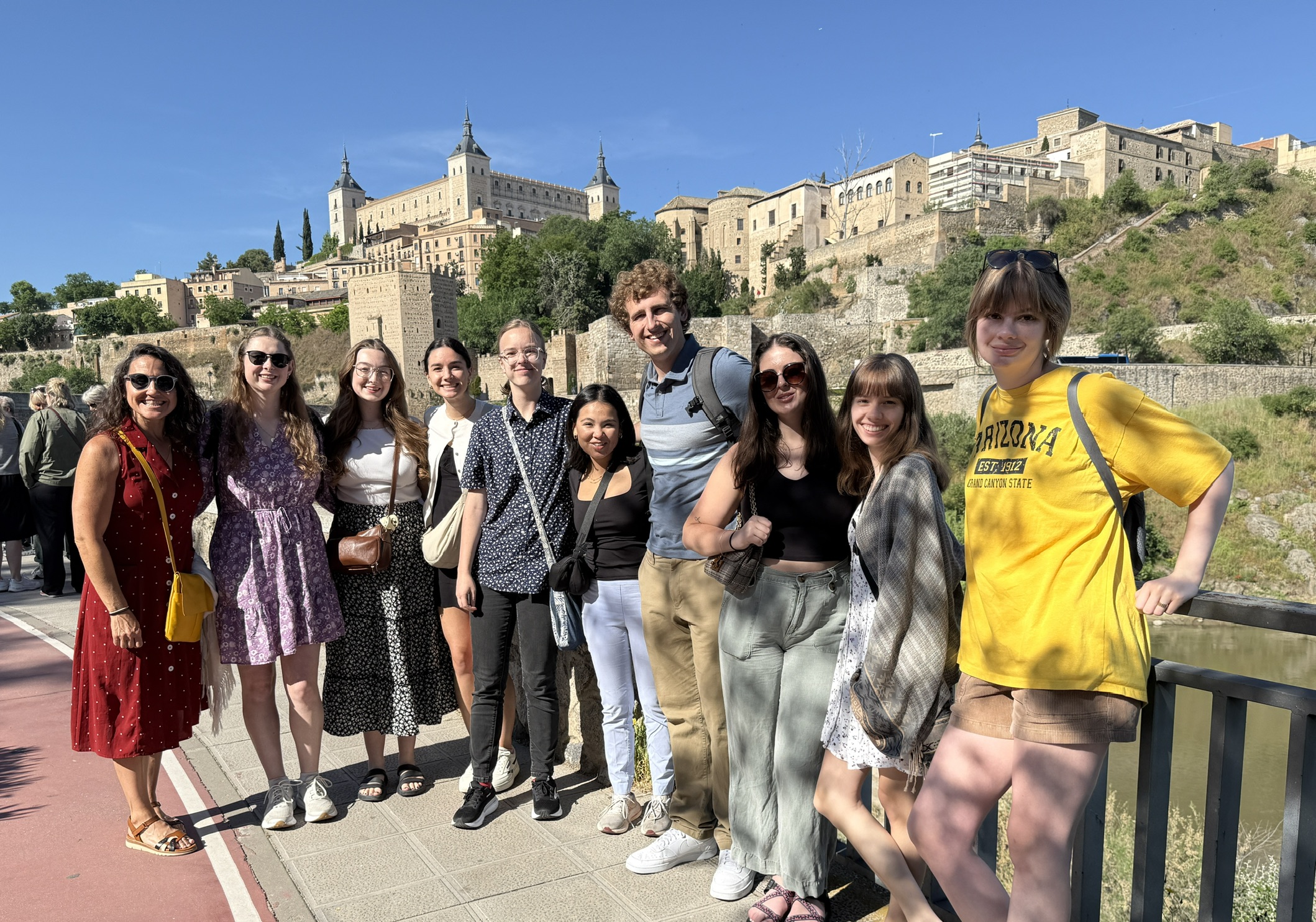
I am an Associate Professor of Spanish and the Director of Graduate Studies in the Department of Modern Languages at Kansas State University. Previously, I served as Interim Department Head from July 2022-August 2024. Since 2019 have been the Director and Faculty Leader for the annual summer study abroad program in Spain (Madrid & Pamplona) that I created in 2018-19 in collaboration with the Universidad de Navarra’s Instituto de Lengua y Cultura Españolas (ILCE). The program will run for its sixth year this summer (2026) and I’ll be leading it for the 5th year in a row!
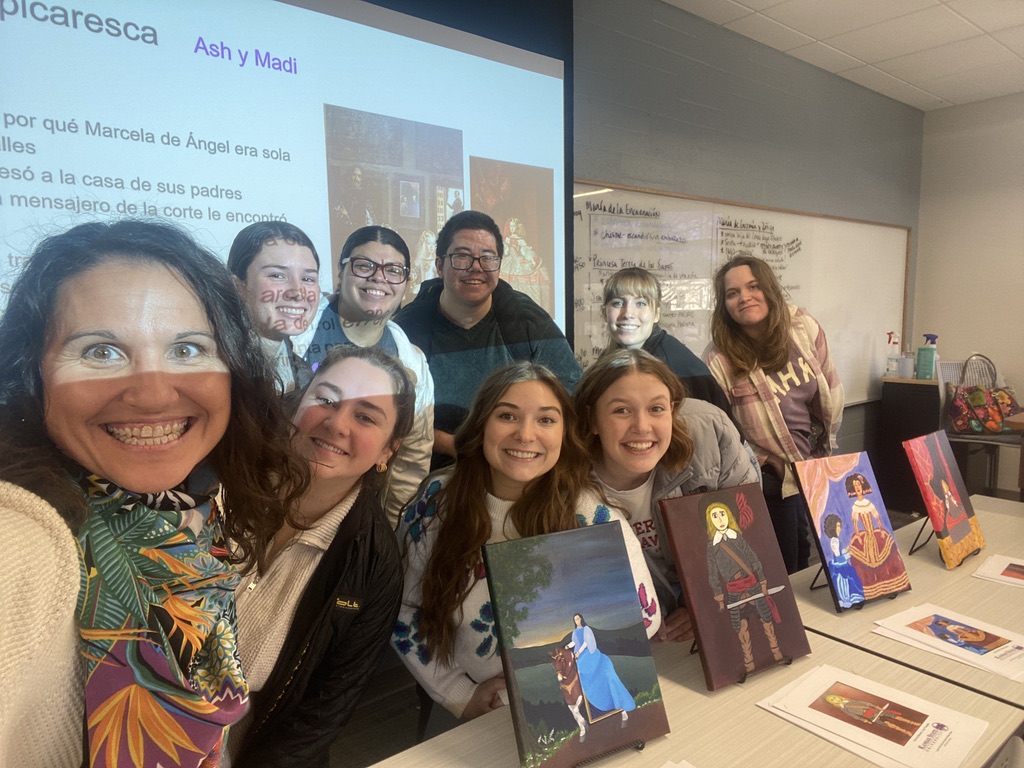
At Kansas State I have taught intermediate and advanced Spanish conversation and grammar, as well as advanced Peninsular and Latin American literature courses since 2015. Some of these have included Pop Culture & Cervantes’ Don Quijote, Spanish Civilization and Culture, Gender & the City in 20th-century Spain, Literary Portraiture & Modern Spain, and Mapping Madrid in the Silver Age. I have taught variations of a graduate seminar on AP Spanish literature, which prepares graduate students — and advanced Spanish-Education majors or current high school teachers — to be successful (AP) Spanish literature and culture instructors. Previously, I spent two years as a Visiting Assistant Professor (VAP) of Spanish at Grinnell College, where I taught Spanish language courses and designed a mid-level transatlantic seminar, Refashioning the Self: Hispanic Women’s Literature in the 20th Century.
I encourage all my students to study abroad, even if they are not language majors, as I believe spending time outside one’s own country, culture, and comfort zone offers enormous opportunities for learning and personal growth. In 2018-19 I designed and planned an annual 4.5-week summer program in Spain for Kansas State students: “Spain Today: Madrid, Pamplona y el Norte”, which offers K-State students the opportunity to earn 6-credits and take an intermediate or advanced course in Spain — including a senior seminar option with a research component. These summer options help double-majors or dual-degree students fit a study abroad experience into their busy academic schedules and still graduate on time, while also incentivizing Spanish minors to continue their language study and pursue a Spanish major. For this reason, I designed the upper-level course to include a flexible, interdisciplinary, and highly individualized research project on-the-ground in Spain. I work with them to choose a research topic that fits with their academic and personal interests so that their Spanish major and their time abroad directly translates to their future goals. In the past, entomology students designed projects on insects and bees; a psychology major investigated attitudes towards masculinity; and hospitality management majors have work on projects related to tourism and gastronomy. Check out a few projects from 2025 here: Students’ Study Abroad Projects: Bridging Language and Research in Spain

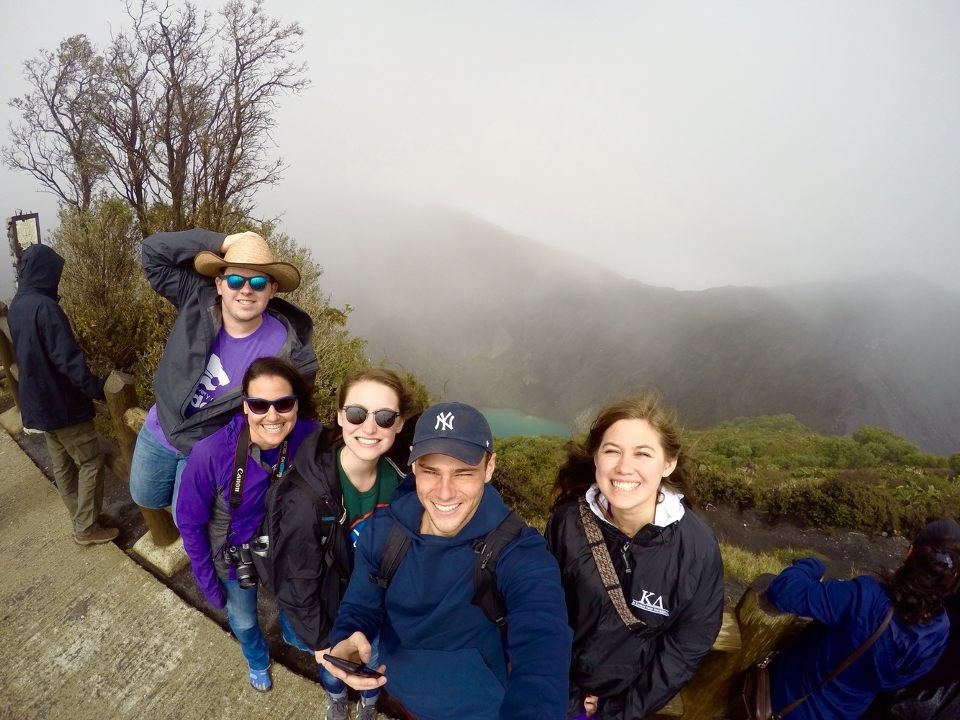
As an undergraduate, a graduate student assistant, and now a professor, I have studied and/or lived in Madrid and Pamplona, Spain (several years total); Adjuntas, Puerto Rico (2-week program); Copán Ruinas, Honduras (one-month program); Puebla, Mexico (6-week program); and Atenas, Costa Rica (2-week program). In January 2018 I took Kansas State Students to Costa Rica on an existing faculty-led program for a 2-week service-learning experience based in Atenas, with day trips to San José, Cartegena, and Playa Jacó.
The blog
I’ve often been asked:
“What exactly does a Spanish (literature) professor research*?”
*insert (not so) subtle sarcasm or incredulity here*
I created this blog to provide insight into my own research and teaching projects for a broad audience — including but not limited to my students, friends, family, and colleagues in other disciplines. I aim to make my projects’ most pertinent themes and topics engaging and accessible to a wide range of readers. For example, over the past few years (since 2019) I’ve shared some of the Spanish publications (novels, essays) that have impacted my thinking on 20th- and 21st-century Spanish feminism and its place in my courses for students who are (predominantly) second-language (L2) Spanish learners:
- Spanish Women’s Literature and Feminism for the L2 classroom: Tsunami, Miradas feministas (2019) (2020)
- Tierra de mujeres (Land of Women) and the Myth of an “Empty Spain” (2020)
- New Books, Creative Maps, and Literary Art for 2021; plus a 2020 re-cap (2021)
I’ve also written “blog-style” versions of my academic book reviews and articles:
- REVIEW: Geographies of Urban Female Labor and Nationhood in Spanish Culture (1880-1975) (2022)
- ARTICLE: Don Quijote, the Graphic Novel, and Snapchat: Alternative Assessments in the L2 Literature Classroom (2020)
- REVIEW: The Body, Blood, and Soul of Spanish Modernity: review of Life Embodied (2019)
- REVIEW: A New History of Iberian Feminisms (2018)
- REVIEW: Multiple Modernities: New essays on Carmen de Burgos (review) (2018)
- ARTICLE: Fashion and the Fine Arts in Carmen de Burgos’ Avant-garde Novel, La mujer fantástica
- REVIEW: Matilde de la Torre and the Republican Courts in 1930s Spain (review) (2017)
I use the informality of blogging to re-visit and further explore my love for art and its connection to my research — especially surrealism and Salvador Dali, two topics that first sparked my interest in Spanish cultural history over 20 years ago (!), but that I had set aside while working on what became my main areas of research: cultural representations of motherhood and feminism in early 20th-century Spanish literature. In the summer of 2020, I taught an online, intensive Transatlantic Art course for the MA Program at the University of Southern Oregon’s Summer Language Institute for Spanish Teachers… and I have adapted that course to the MA Spanish program here at K-State (2023 & 2024), so I will likely continue to post art-teaching-related content as I continue to teach that course!

Overall, I have enjoyed, an continue to enjoy, this always-evolving digital project — especially in terms of the connections I’ve made, the feedback I’ve received, and the new projects it has inspired. I try to post something new about once per month (although that clearly did not happen while I served as department head – hence the lag from 2022-2024…!).
DISCLAIMER – Since I write so many posts linking to books or media that can easily be purchased on Amazon, I chose to become a participant in the Amazon Services LLC Associates program, an affiliate advertising program designed to provide a means for sites like mine to earn small advertising fees by advertising and linking to Amazon.com.


 Rebecca M. Bender, PhD
Pingback: Digital Encounters with Don Quixote: A Critical Analysis of Rebecca Bender’s Use of Quijote Interactivo – Whispers of the Amazon